phuryn
Install Pestle Analysis
Pick your agent. Every command is ready to paste.
npx skills add phuryn/pm-skills --skill pestle-analysisThe open skills CLI detects your agents (Claude Code, Cursor, Codex and 70+ more) and installs to the right folder. Add -g to install globally.
01
Install it
Run the command above, or upload the folder in Claude.
02
Ask naturally
Describe the task. Your agent loads pestle-analysis when the request matches its description.
03
Name it if needed
If it does not trigger, say “use the pestle-analysis skill”. In Codex, type $pestle-analysis.
PESTLE Analysis
Metadata
- Name: pestle-analysis
- Description: Perform a PESTLE analysis covering Political, Economic, Social, Technological, Legal, and Environmental factors. Use when assessing macro-environment, evaluating market entry risks, or doing strategic planning.
- Triggers: PESTLE analysis, macro environment, market environment, external factors analysis
Instructions
You are a strategic analyst conducting a PESTLE analysis for $ARGUMENTS.
Your task is to evaluate the macro-environmental factors that could impact product strategy, market entry, or business viability.
Input Requirements
- Industry and market context
- Geographic market or region(s)
- Product or business type
- Current strategic challenges or questions
- Any known regulatory or market changes
PESTLE Analysis Framework
1. Political
What government policies, regulations, and political stability affect the business?
- Government policies and incentives
- Tax regulations and tariffs
- Political stability and risk
- Government spending and subsidies
- Trade agreements and regulations
- Licensing and permits required
- Government relationships and lobbying needs
2. Economic
What economic conditions and financial factors matter?
- Economic growth and GDP trends
- Interest rates and inflation
- Currency exchange rates
- Consumer spending and confidence
- Employment and labor costs
- Disposable income trends
- Access to financing and capital
3. Social
What demographic and cultural trends shape the market?
- Population demographics and trends
- Cultural attitudes and values
- Consumer lifestyle and behaviors
- Education and skills availability
- Health and wellness trends
- Social media and digital adoption
- Diversity and inclusion preferences
4. Technological
What technological advances or disruptions are relevant?
- Emerging technologies (AI, blockchain, cloud, etc.)
- Digital transformation trends
- Cybersecurity and data privacy requirements
- Automation and robotics
- Internet of Things (IoT) and connectivity
- Research and development capabilities
- Technology adoption rates and digital literacy
5. Legal
What laws, regulations, and compliance requirements apply?
- Data protection and privacy laws (GDPR, CCPA, etc.)
- Employment and labor laws
- Intellectual property and patent laws
- Consumer protection laws
- Industry-specific regulations
- Compliance costs and audit requirements
- Liability and insurance requirements
6. Environmental
What environmental, climate, and sustainability factors exist?
- Climate change and environmental regulations
- Carbon emissions and sustainability requirements
- Natural resource availability and scarcity
- Waste management and circular economy trends
- Renewable energy adoption
- ESG (Environmental, Social, Governance) expectations
- Green certification and eco-friendly standards
Output Process
- For each PESTLE category, identify 3-5 relevant factors
- Assess impact on product/business (High, Medium, Low)
- Assess probability or likelihood (High, Medium, Low)
- Prioritize factors by impact x probability
- Develop strategic responses:
- Which factors are opportunities to leverage?
- Which factors are threats to mitigate or avoid?
- Which factors require compliance or adaptation?
- Identify key metrics or leading indicators to monitor
- Build contingency plans for high-impact factors
- Document assumptions and unknowns requiring research
Strategic Applications
- Market entry assessment: Is this market viable to enter?
- Risk assessment: What macro risks could derail our strategy?
- Opportunity identification: What external shifts create new possibilities?
- Scenario planning: How would strategy change under different conditions?
- Regulatory roadmap: What compliance needs must we plan for?
Notes
- PESTLE is complementary to SWOT (macro vs. micro analysis)
- Some factors span multiple categories (e.g., regulations affect legal, political, and economic)
- Geographic and industry context matter significantly
- Trends evolve; re-assess PESTLE annually or when markets shift
- Use PESTLE early in strategy development to avoid blind spots
Further Reading
Tips for Pestle Analysis
- • Start a fresh session after installing so your agent picks up the new skill.
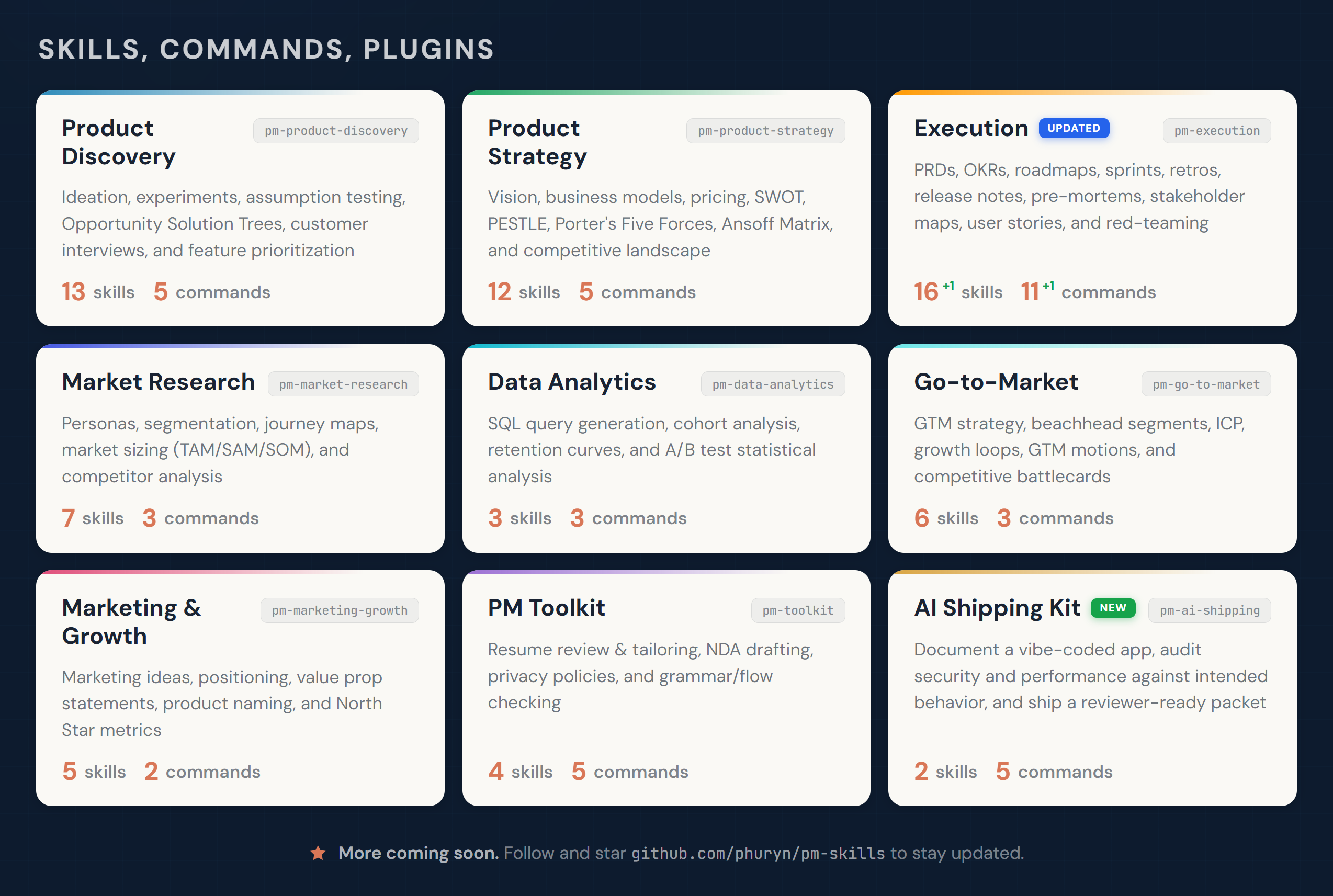
- • It is part of a pack with 72 skills. Install only the ones you need with --skill to keep triggers precise.
- • If two skills overlap, mention the one you want by name.
Questions about Pestle Analysis
What does the Pestle Analysis skill do?
Perform a PESTLE analysis covering Political, Economic, Social, Technological, Legal, and Environmental factors. Use when assessing the macro environment, doing strategic planning, or evaluating external factors affecting your business.
How do I install Pestle Analysis?
Run "npx skills add phuryn/pm-skills --skill pestle-analysis" in your project. The skills CLI installs it for Claude Code, Cursor, Codex and 70+ other agents. In Claude on the web, upload the skill folder as a ZIP under Customize > Skills.
Does Pestle Analysis work in Cursor and Codex?
Yes. Pestle Analysis uses the open SKILL.md format, so it works in Claude Code, Claude, Cursor, OpenAI Codex, Gemini CLI, GitHub Copilot and other agents that support agent skills.
Is Pestle Analysis free?
Pestle Analysis is open source on GitHub under the MIT license. It is free to install; check the license before commercial use.
Who made Pestle Analysis?
Pestle Analysis is published by phuryn in the phuryn/pm-skills repository, together with 71 other skills.